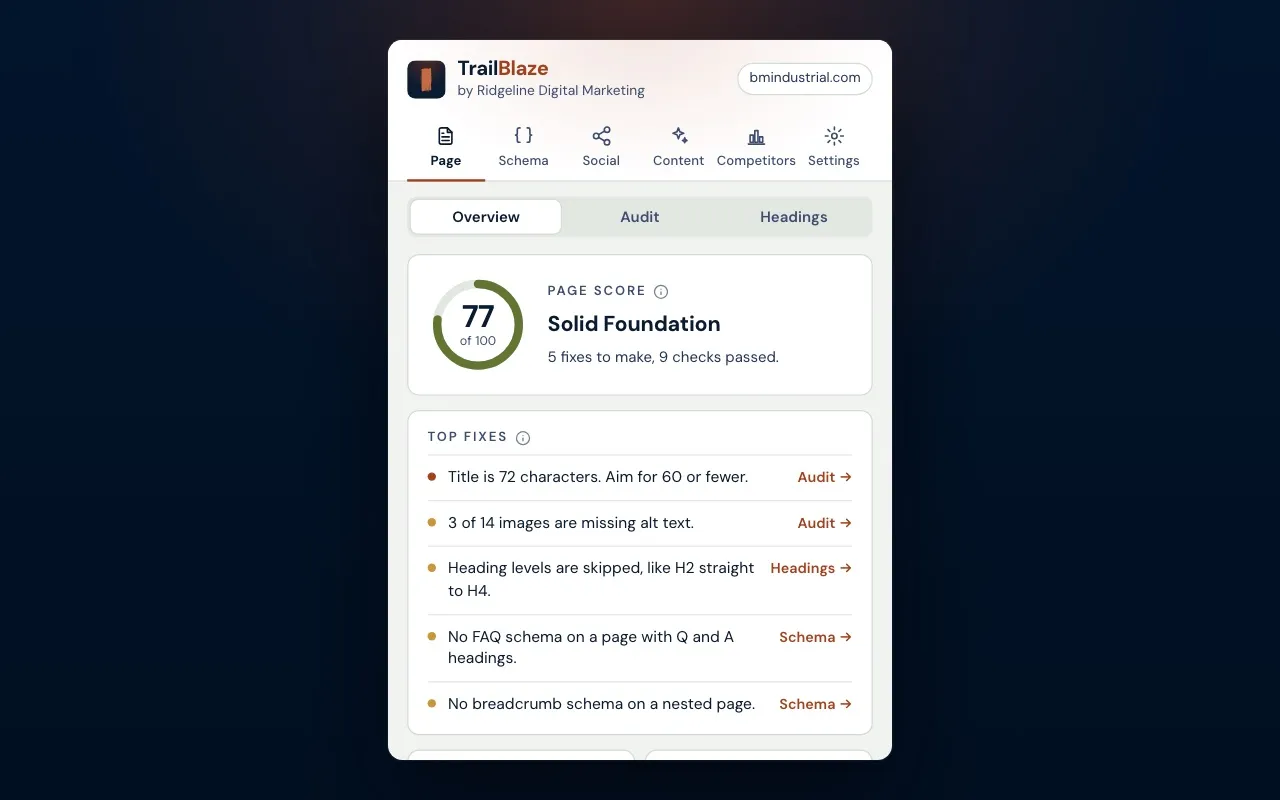
I built TrailBlaze because I wanted it for my own audits. Then I released it publicly, because good SEO work deserves good tooling.
What it does
- Page score: a 0 to 100 score from on-page checks, with the top fixes ranked by impact and a one-click jump to each
- Page audit: title, meta description, canonical, robots, language, indexability, and character counts
- Page signals: word count, reading difficulty, load time, and mobile viewport
- Heading outline with warnings for a missing H1, multiple H1s, or skipped levels
- Link list with filters and CSV export
- Image alt-text checks that name the exact images missing it
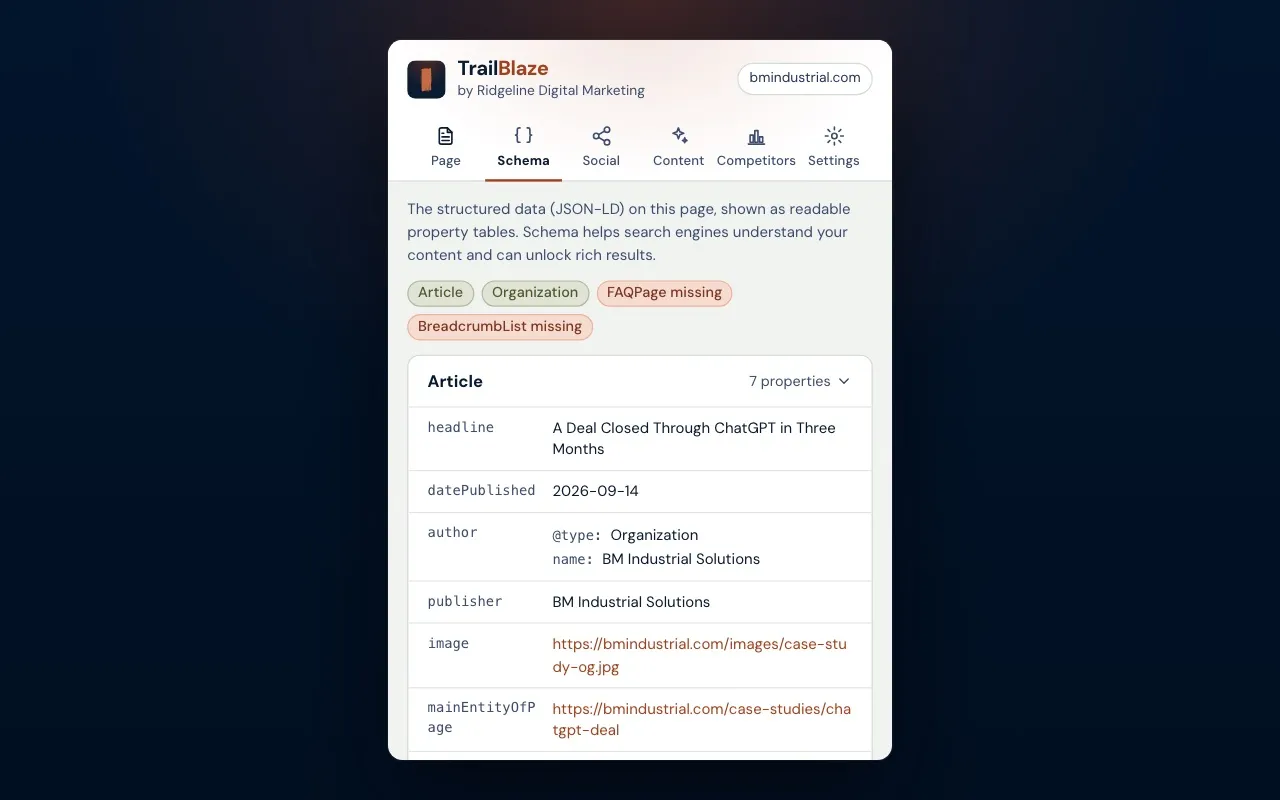
- Structured data reader for schema / JSON-LD, flagging likely-missing schema and linking to Google’s Rich Results Test
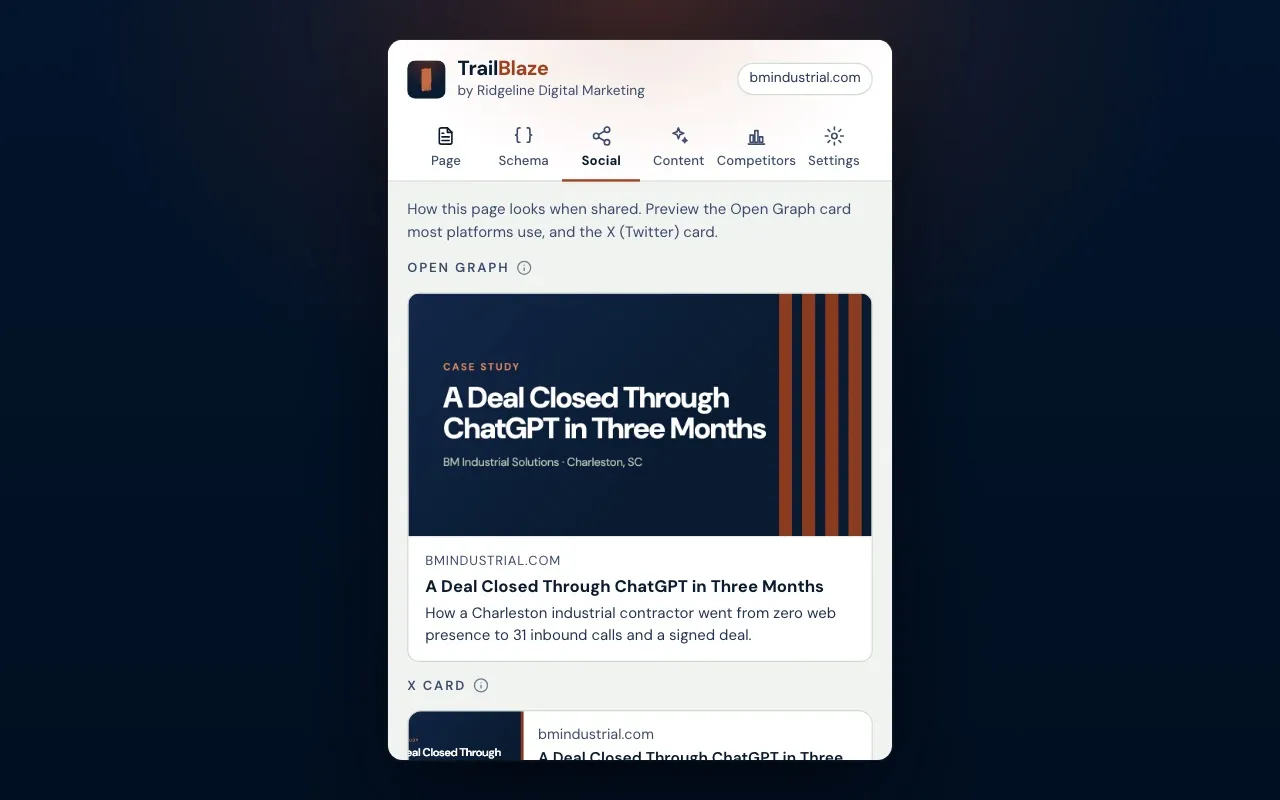
- Social previews for Open Graph and X cards, with a tag check
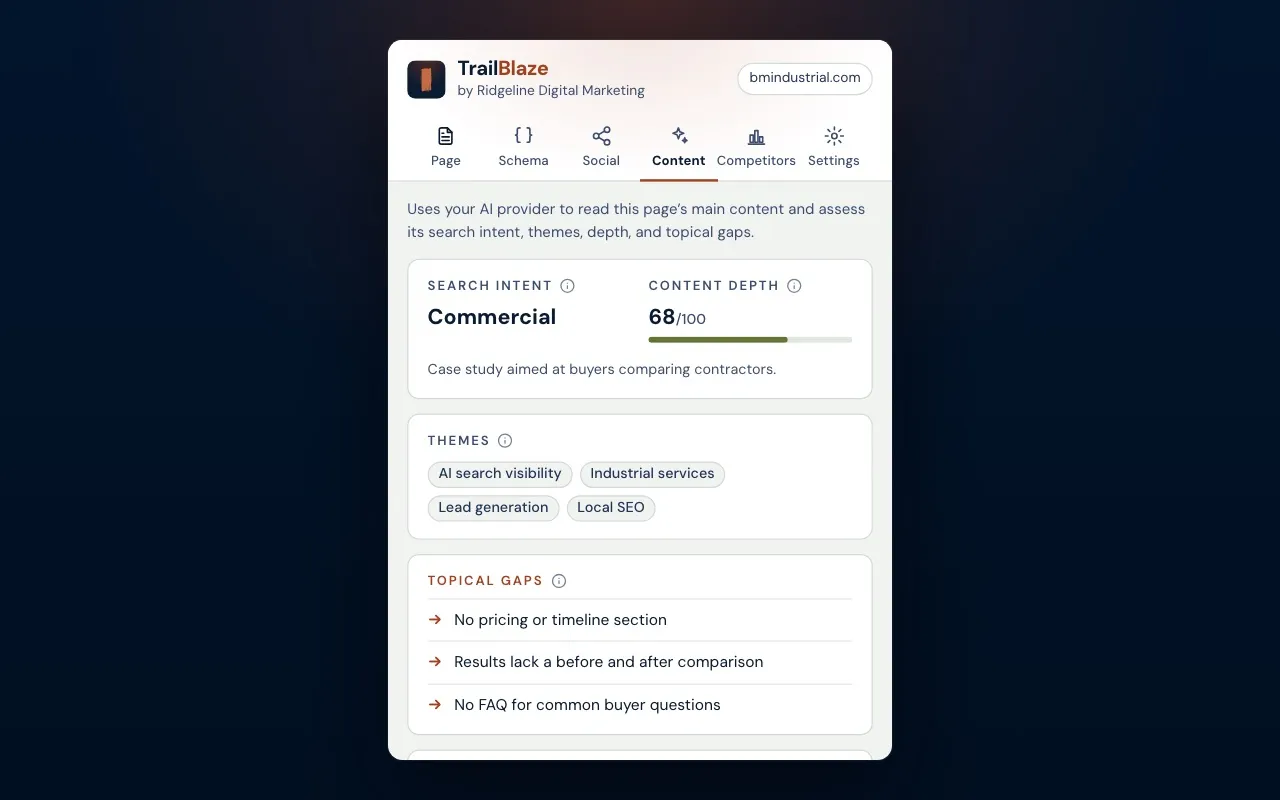
- AI content analysis with Claude or OpenAI, or open the page in Claude with no key
- Keyword prominence checks
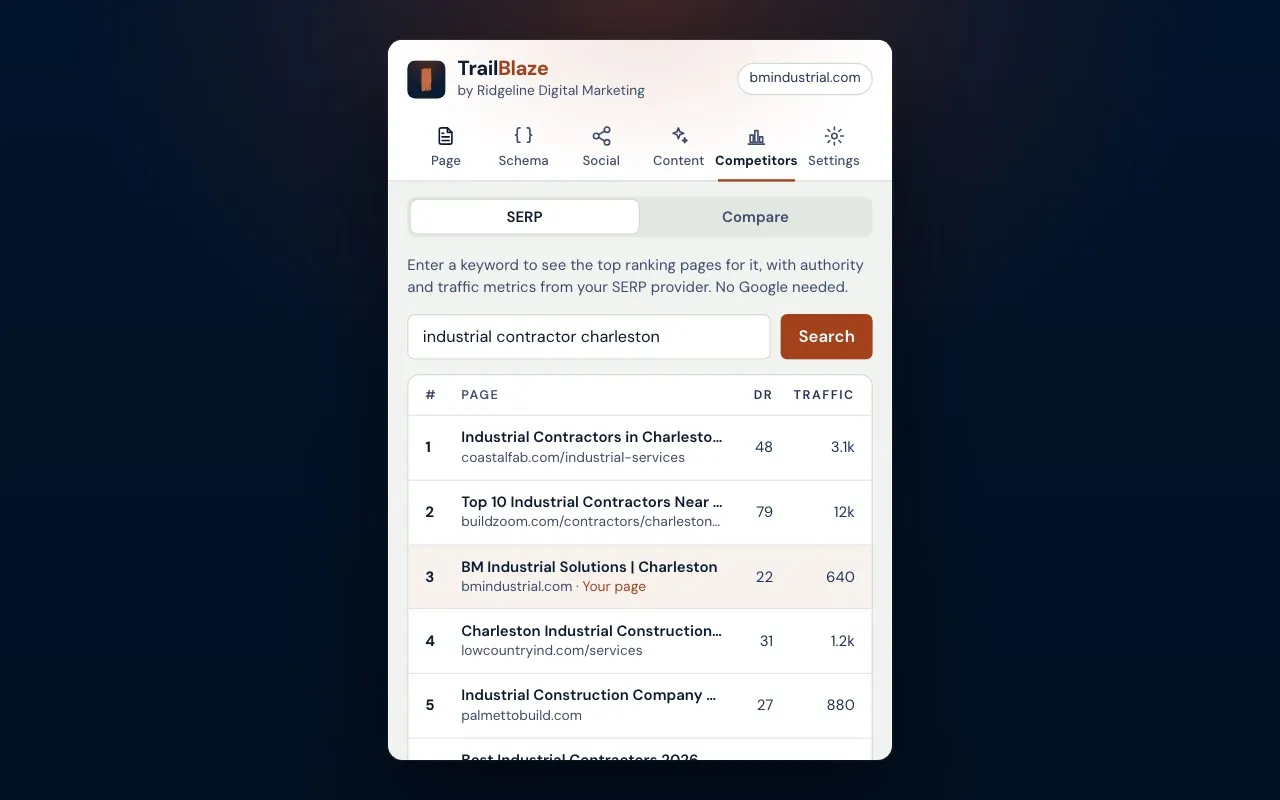
- SERP competitor data from Ahrefs or SEMrush
- Compare mode: side-by-side content comparison showing why a competitor outranks you
How it’s built
Most features need no setup or account. AI and competitor features use bring-your-own API keys, so users control cost and data, and nothing routes through Ridgeline’s servers. It’s built on Chrome’s Manifest V3 and is currently at version 1.3.1.
Version 1.3 rebuilt the popup on the Ridgeline design system, with light and dark themes, a new icon, and a first-run onboarding screen. The Page tab now splits into Overview, Audit, and Headings, alongside Schema, Social, Content, Competitors, and Settings. All cross-origin API calls run through a background service worker, so API keys never pass between parts of the extension. AI results are cached for 24 hours to keep costs down.