The 3D site architecture map made the problem visible: the degree program section’s URL structure was confusing, for people and for search engines. After showing the team where it broke down, I designed this structure to fix it and make it clear and well defined.
Two paths, two jobs
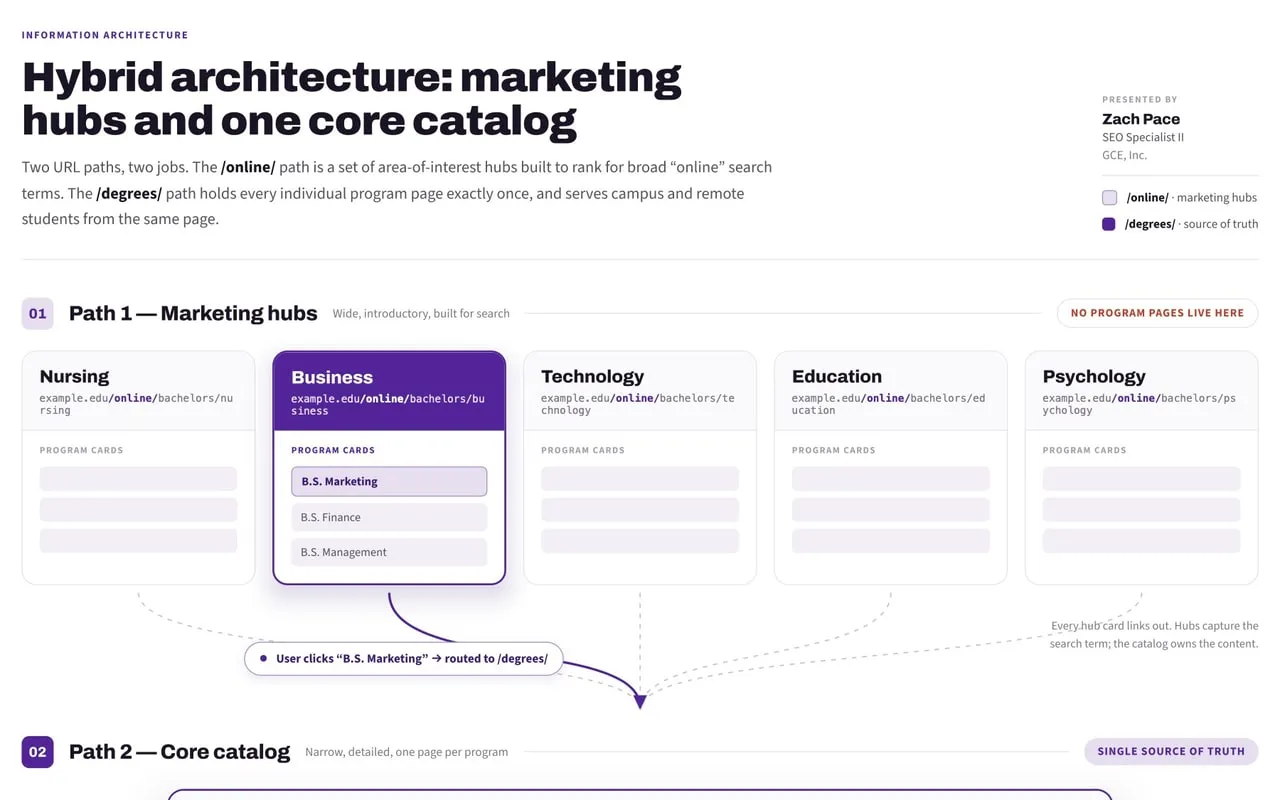
Path 1: marketing hubs (/online/). A set of area-of-interest hubs, like nursing, business, and
technology, built to rank for broad “online” search terms. They’re wide and introductory, and no program
pages live here. Each hub shows program cards that link out to the catalog.
Path 2: the core catalog (/degrees/). Narrow and detailed, with one page per program. It’s the single
source of truth: a program like the B.S. in Marketing lives at one URL and nowhere else.
The rules
- Hubs hold no program pages.
/online/stops at the area-of-interest level. Its job is to rank for broad online searches and hand visitors off. - Each program exists once.
/degrees/is the only place a degree page lives, so there are no duplicate URLs competing with each other in search. - One page, two tracks. Campus and online details sit side by side with equal weight, and neither is the default, so either audience finds its path right away.
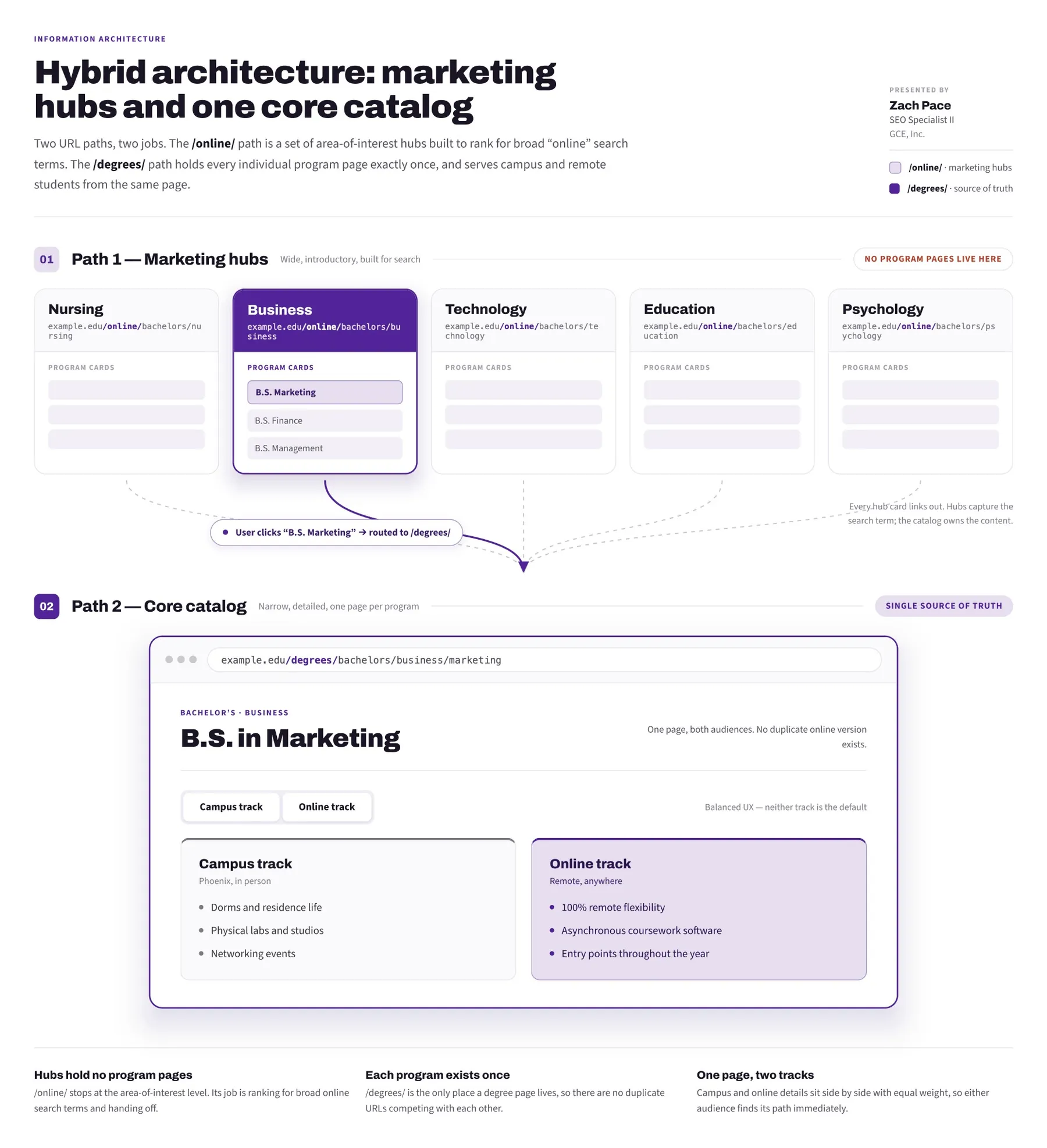
The architecture diagram I presented to the team. Example URLs are placeholders.